Hydrangea diseases
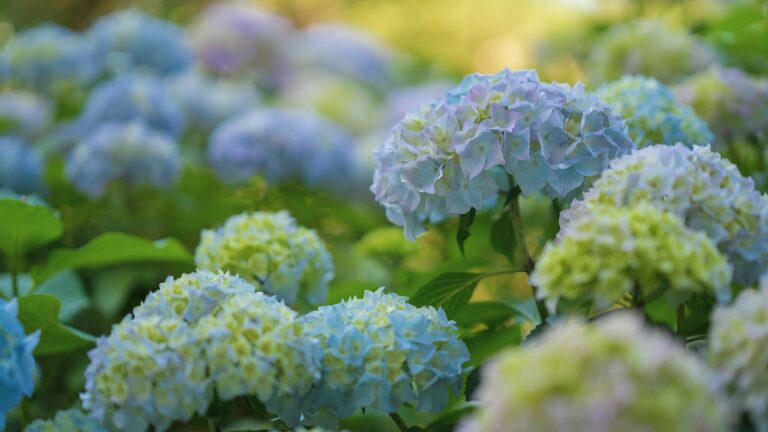
Hydrangeas are very popular shrubs. People love their beautiful flowers. Although they are quite resistant, still can be vulnerable to some diseases and pests. You must remember that proper fertilization and place where they grow is very important. Here I will explain how to deal with hydrangea diseases and pests.
Non-infectious Hydrangea diseases
Growing healthy hydrangeas means that you should provide fertile, humus, moist and slightly acidic soil. Also hydrangeas like to be in shade.
If hydrangeas leaves start to turn yellow that means pH of thew soil is too high. This condition is known as a leaf chlorosis.
In this case you should use fertilizer to acidify soil. In the future you can prevent this hydrangea disease by using mineral fertilizers low in calcium.
You can also mulch soil under the shrubs with pine bark. it is acidic and slowly decomposes, which helps to maintain lower soil pH.
Occasionally, hydrangea leaves can be burned. In this case, in hot and sunny weather, the more outer leaves turn yellow or brown in their middle parts, some of them may fall.
Remember that Hydrangeas are shade-loving plants. Their leaves are very sensitive to excess sun, therefore can be damaged in very sunny locations.
To prevent leaf burns, provide the plant with more shade and water it regularly.
If your hydrangea doesn’t flower, you need to check if place is right. Windy position during winter will damage hydrangea shoots. Also incorrect pruning can be at play here.
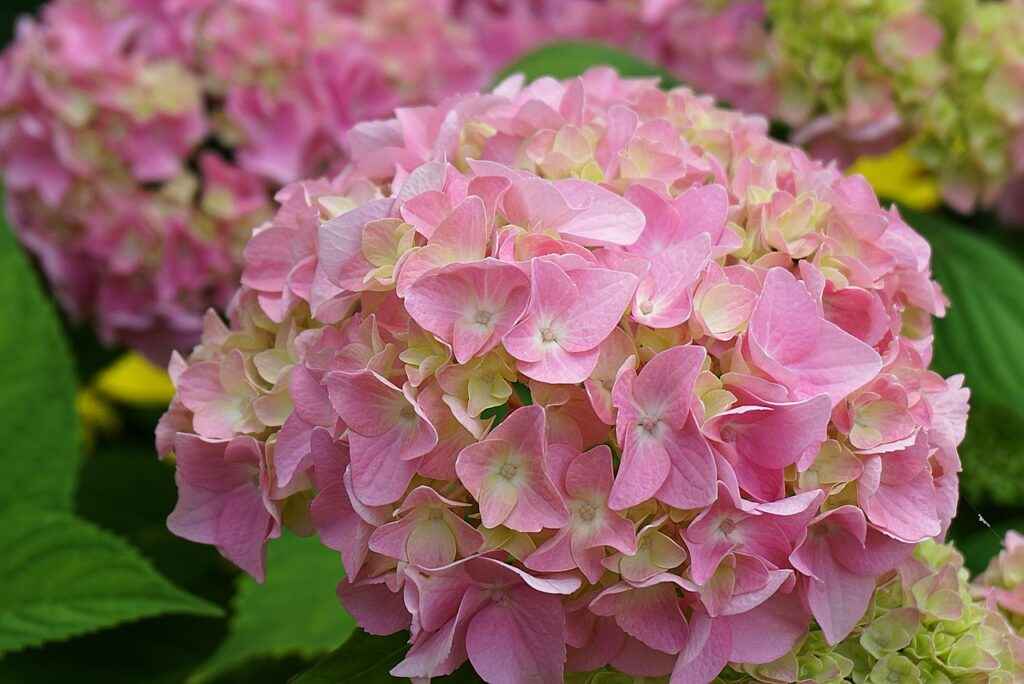
Remember that hydrangea bloom on last year shoots. If you prune them in spring there will be no flowers.
Infectious Hydrangea diseases
Fungal diseases
Garden hydrangeas (Hydrangea macrophylla) are the most common in our gardens.
Non-infectious diseases are not the only danger to hydrangeas. They can also be attacked by fungal diseases.
Botrytis cinerea is a fungus that in most cases causes grey mold.
The development of this disease is caused by frequent rainfall and shading of bushes. The symptom is the death of shoot tips or single leaves. The youngest leaves turn black and the rot extends to the stem.
On older leaves, their tips turn brown and blacken mainly. Individual flowers may also turn brown, and a gray coating of mycelium and spores appear on their surface. You must cut and remove infected parts of plant.
If you notice white coating on hydrangea leaves, initially in spots, but with time it may cover entire leaf, it is a sign of fungus Erysipe polygoni. The tarnished leaf surfaces turn brown with time. Infected leaves grow more slowly and apical shoots deform.
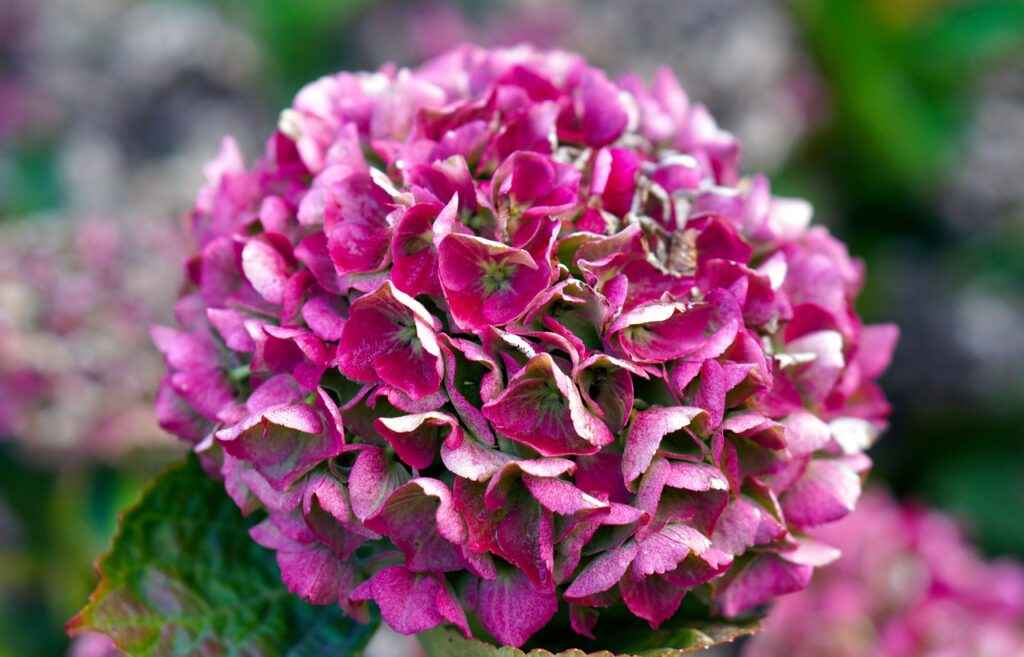
This fungus is causing powdery mildew of hydrangea. After you notice the symptoms, you must remove affected parts of hydrangea. Also, you should carefully rake out all fallen leaves from under the bushes, so they will not be a source of reinfection.
Leaf spot
Relatively often, especially on the oak-leaved hydrangea, leaf spot on the hydrangea is observed. When infected with this disease, spots of various sizes are observed on the hydrangea leaves, usually round, initially light brown, then brown and gray-brown, sometimes surrounded by a red border.
When you don’t control this disease, more and more spots will appear on the leaf and with time the whole leaves die.
In order to prevent the development of the disease, avoid excessive plant density and wetting the leaves during watering (water directly onto the soil). You should also remove first leaves showing blotch symptoms.
In the fall rake out all fallen leaves from under the bushes so that they are not a source of infection in the next season. Of course, do not compost such leaves, but remove them from the garden.
Hydrangea pests
Hydrangeas can also suffer from pest attacks. Fortunately pests do not cause much damage. Only two pests appear on hydrangeas – aphids and spider mites.
Aphids can be found on the tops of hydrangea shoots and the underside of leaves. They form large clusters of dark green to black wingless insects. By sucking the sap from the plant, aphids limit its growth and cause deformation of leaves and inflorescences.
They also secrete sticky honey dew, which is conducive to the formation of black bloom of seed fungi.
The second pest to appear on hydrangeas is the spider mite. It is a mite that feeds on the underside of hydrangea leaves from May to mid-August. By sucking the sap from the leaves, it causes yellow, mosaic-like discoloration on surface.
Spider mite initially appear along the veins of the leaves, and then may cover the entire surface of the leaves. Heavily affected leaves turn yellow, their tips turn brown, eventually wilt and fall off.