How to protect hydrangea in winter?
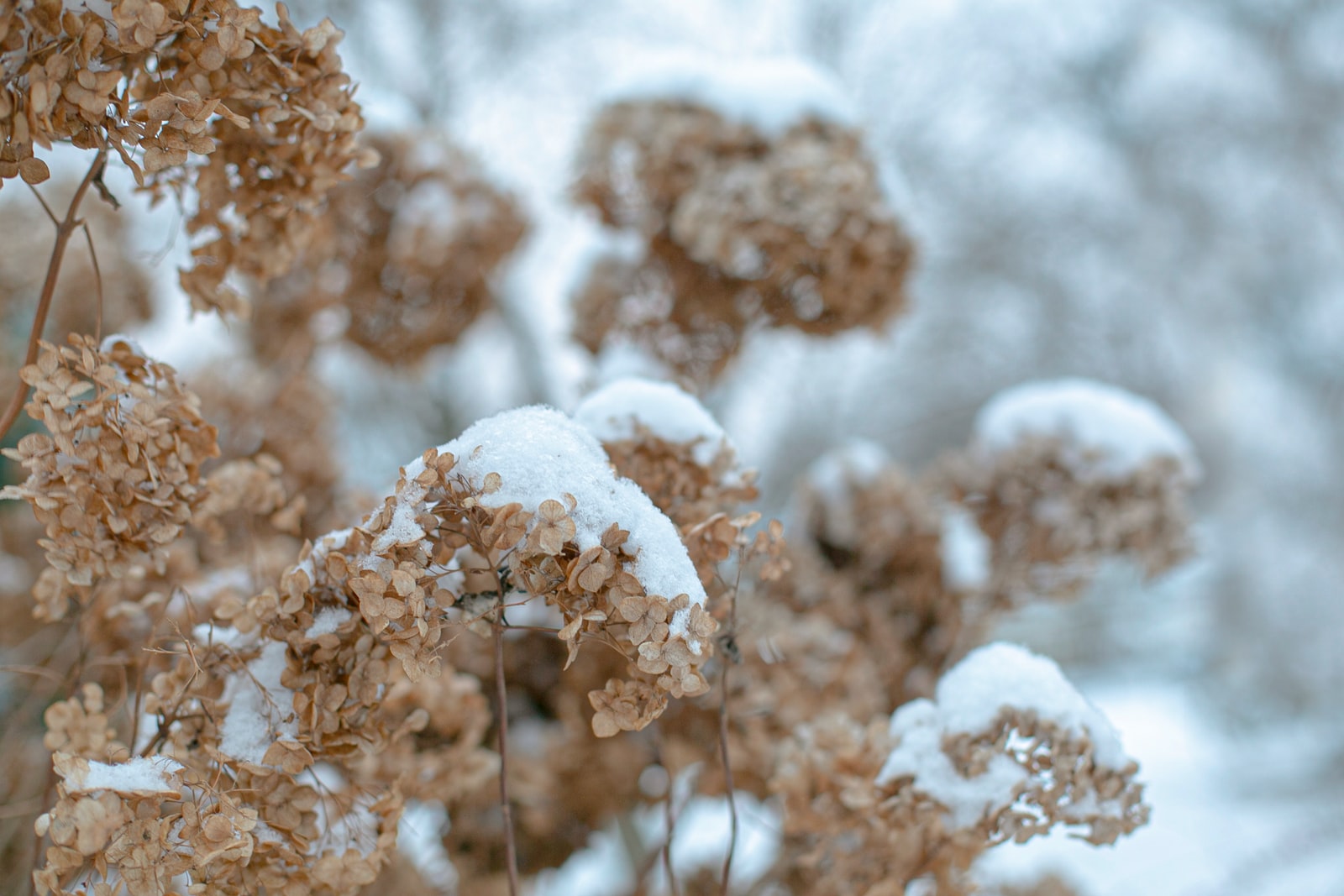
Some Hydrangea species develop flower buds in the summer, in the year preceding their blooming. As a result, hydrangea flower buds may freeze in winter. The bushes will not bloom the following year. The best way to prevent this from happening is to protect hydrangea in winter.
When to protect hydrangea for winter ?
You should start protecting your bush at the end of November. When ground start to freeze to 3 – 4cm. If you do it too early you may raise ground temperature. That will confuse plant and it can start its vegetative process (start it’s spring cycle). So during first stronger frost it will definitely die.
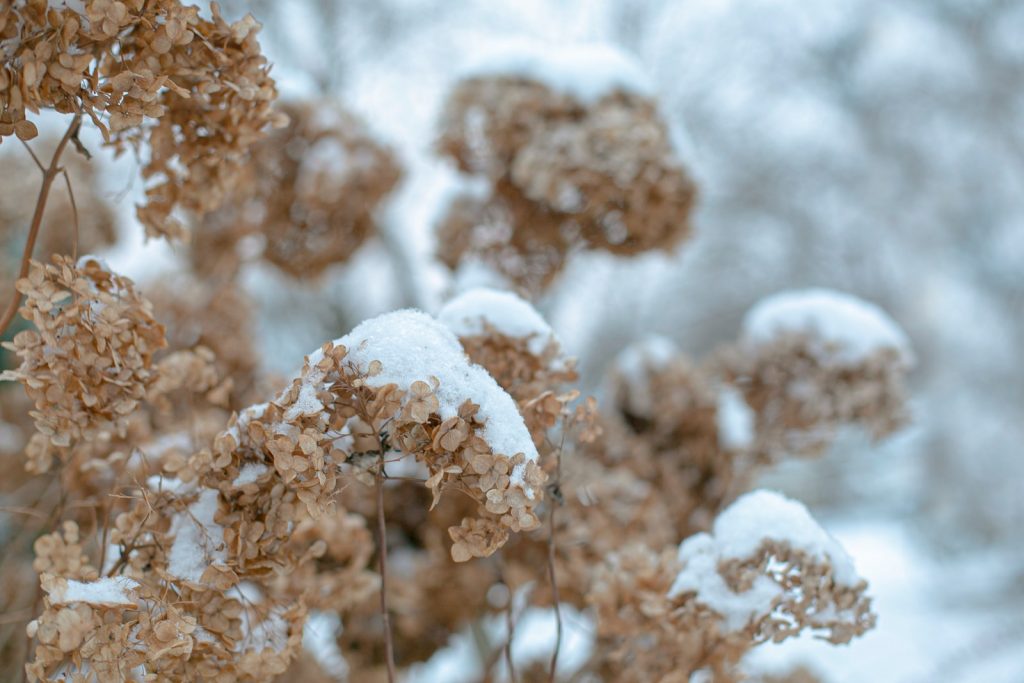
Remember: Before you cover your Hydrangea – remove all dry shoots. Also don’t prune your shrub before winter.
Protect Hydrangea in winter through mounding
The easiest and very effective way of protecting Hydrangea in winter is mounding. You can cover plants with bark or peat. Do it when ground is frozen to few centimeters deep, usually not earlier than second half of November.
In Spring you can spread bark around Hydrangea. It will help protect soil from losing water and stop weeds to grow.
Protect Hydrangea in winter with nonwoven fabric
Nonwoven fabric is very common in protecting plants, especially bushes. You must wrap your bush two or three times around and tie with string. Nonwoven fabric is very strong, breathable and it doesn’t keep moisture inside.
You can buy special hoods made of nonwoven fabric in garden stores. Use of those hoods is very simple. You just need to put it over your plant and tie with string (it is already there).
If you must protect a group of Hydrangea shrubs, it is a good idea to make a little fence around them from nonwoven fabric. Fence must be about 80cm to 1m high. It will protect plants from harsh frosty wind and will keep snow inside (which in this case work as an insulation).
Protect Hydrangea in winter that is growing in pot
You should start prepare Hydrangea in pot in second part of summer. Slowly start to limit watering. When plant stop growing and leaves fall take it inside.
Room doesn’t have to be light but it must me cold – around 0 degrees C – with low humidity. During winter you must regularly ventilate room. Also don’t forget about watering – however do it in minimal amounts – just not to let roots dry.
During wintering keep checking for pests and disease. When plants start to grow, they will need a lot of light and more warmth during the day. You can take Hydrangea in pot outside when risk of frost is gone. That will be in most cases around second half of May.
If you have Hydrangeas that are frost resistant you can leave them outside. In this case you will have to protect pot with styrofoam and bush with nonwoven fabric. Then move pot closer to wall or recess to protect it from wind.