How orchids are pollinated ?
Orchids, in the course of long-term evolution, have developed many very “sophisticated” adaptations, allowing insects to pollinate flowers.
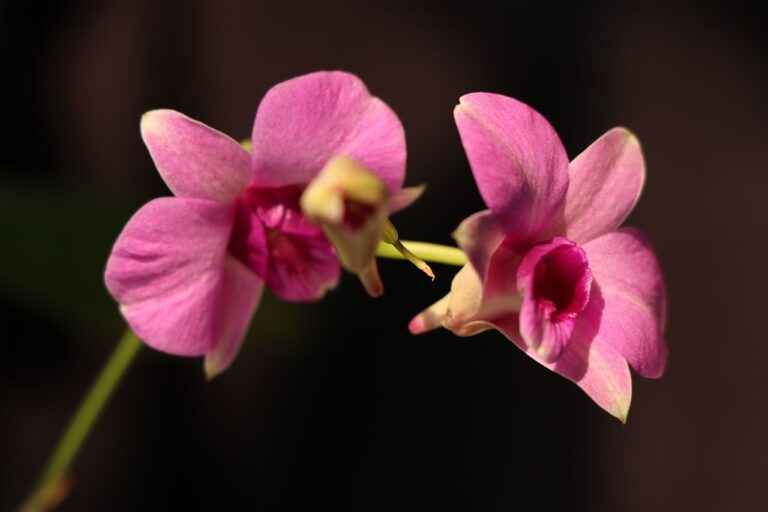
Orchid flowers come in very different shapes, but always consist of six petals, arranged in two whorls, three petals in each.
One of the petals is transformed into the so-called “Lip”, which in most species is very colorful. It is often placed in the front of the entire flower – it then serves as a landing spot for visiting insects.
So, how orchids are pollinated?
Inside the flower, apart from the pistil, there are only two stamens, often one of them is sterile. What is characteristic of orchids – the stamens are fused with the pistil in the so-called columnar.
The pollen is glued together at the top of the stamen into a single packet. The way is placed so that it sticks to the head or body of a visiting insect.
A packet of pollen is transferred by an unaware insect to the next flower. Where it sticks to the stigma of the pistil. In those species whose flowers are the most “structurally advanced”, there are additional devices inside. It allows only insects of the appropriate size to enter the flower.
Appropriate, that is, large enough to have to touch the pollen packet waiting for them, and in the next flower – the pistil.
The insects visiting these precise traps are attracted to their interior by the scent of flowers, their color, and the nectar that awaits inside the flower.
Can you propagate an orchid from a leaf?
Bees and orchids relationship
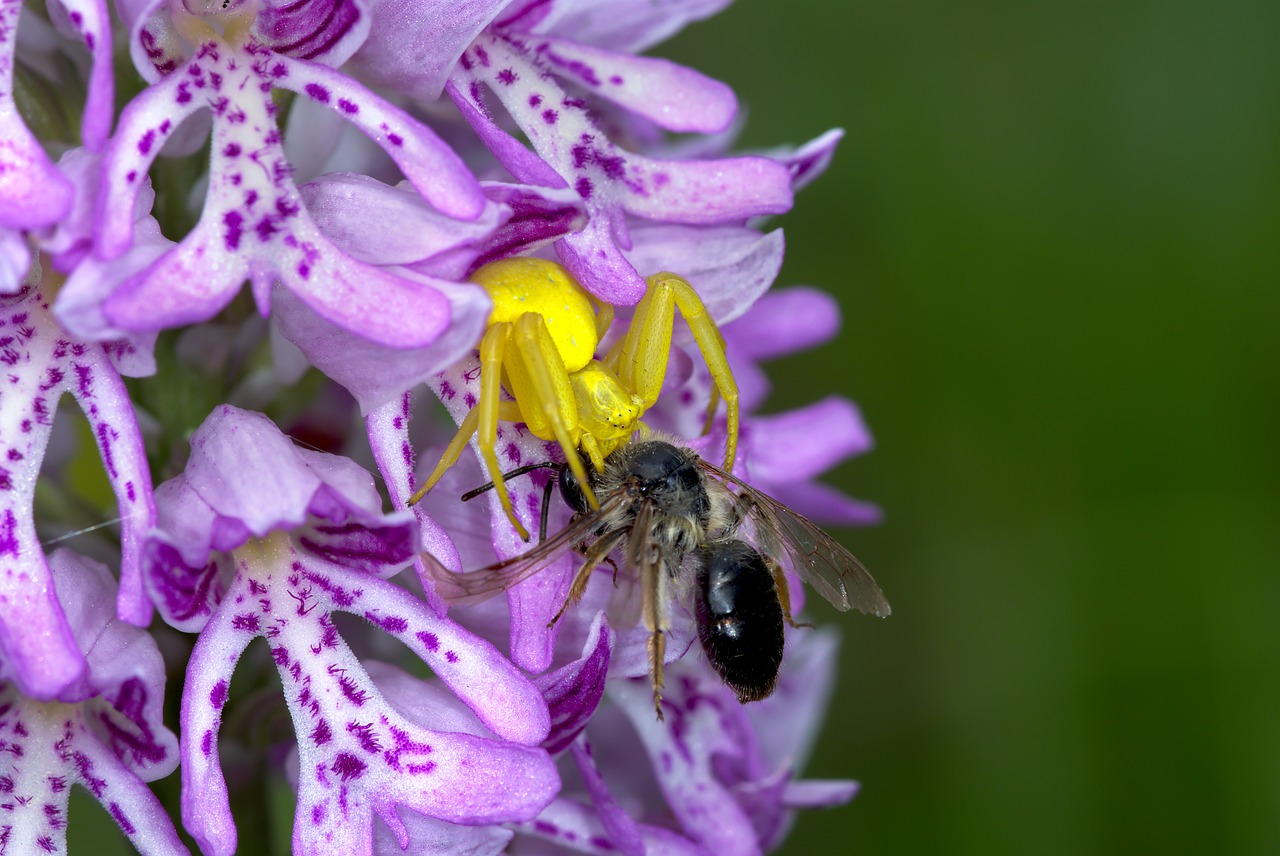
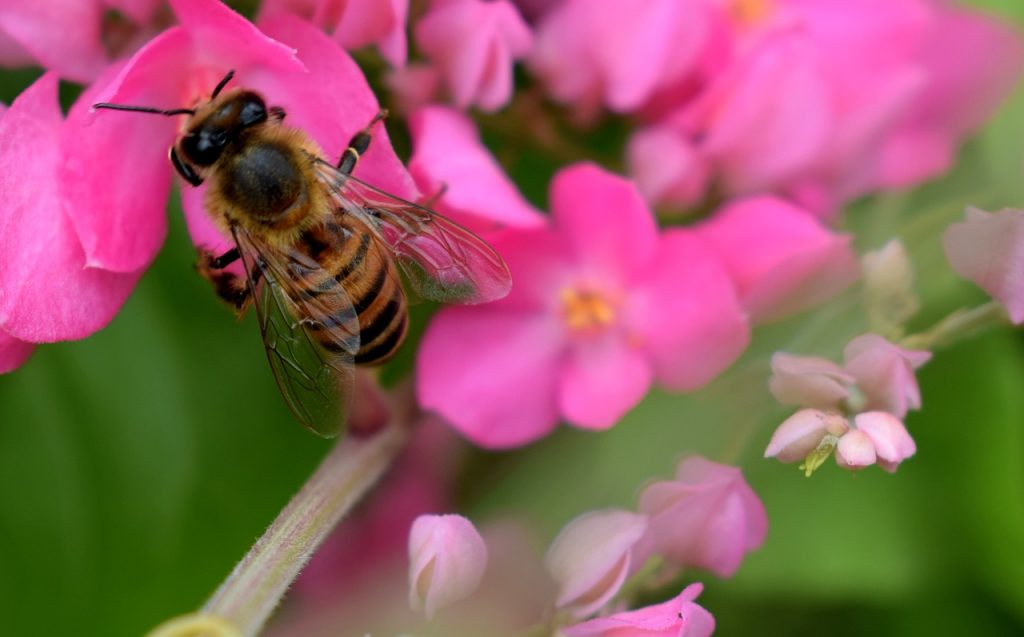
There are, however, species of orchids that attract insects … with other insects. In fact, the bait is the parts of the flower that are shaped so as to resemble the females of certain species of bees, bumblebees and flies.
Orchids are pollinated by the males of these insects that sit on flowers, trying to mate and extend the life of their own species. However, thanks to the “trick” of the orchid, this act serves this time not for the insects, but for the plant.
In addition to dozens of solutions similar to those described above, orchids also surprise with other features of their biology. Each flower produces tens of thousands of seeds that are microscopic and very light.
This allows them to be dispersed by the wind. Small dimensions are possible due to the fact that – unlike most plants – orchid seeds contain almost no spare nutrients.
But how does the young plant manage without them, right after germination? It turns out that for its development, it requires the company of certain species of fungi, which entangle the roots of the seedling, supply it with nutrients until it develops enough to be able to feed itself.
It was for this reason that the first attempts to grow orchids from seed failed. Even today, reproducing them in this way is difficult, and decorative orchids, which can be found in flower shops, are most often reproduced by in vitro method.
Orchids are one of the most numerous families in the flora of our planet. The number of their species is estimated at around 20,000! They are found in nearly all climates and environments, from tropical rainforests to the circumpolar tundra. The most species, including the most magnificent ones, are found in the tropics.
Night orchid pollinator Xanthopan morganii praedicta
Xanthopan is a moth that pollinates Madagascar orchid (Angraecum sesquipedale) known as a Christmas star orchid. Charles Darwin predicted that an insect with very long tongue must be responsible for pollinating Madagascar orchid. It is because how this exact species is built.
It wasn’t until 1903 (21 years after Darwin death) that moth was actually discovered. However it took another century to confirm that this creature is the main pollinator.
Orchids pollinated by birds
The purple and scarlet red flowers of South American orchids, mainly of the genus Masdevalia, which do not develop lips, are pollinated by hummingbirds, which float in the air, sticking out of their long beak an even longer tongue, take nectar with it and incidentally collect pollen.