Why Peace lily is not flowering ?
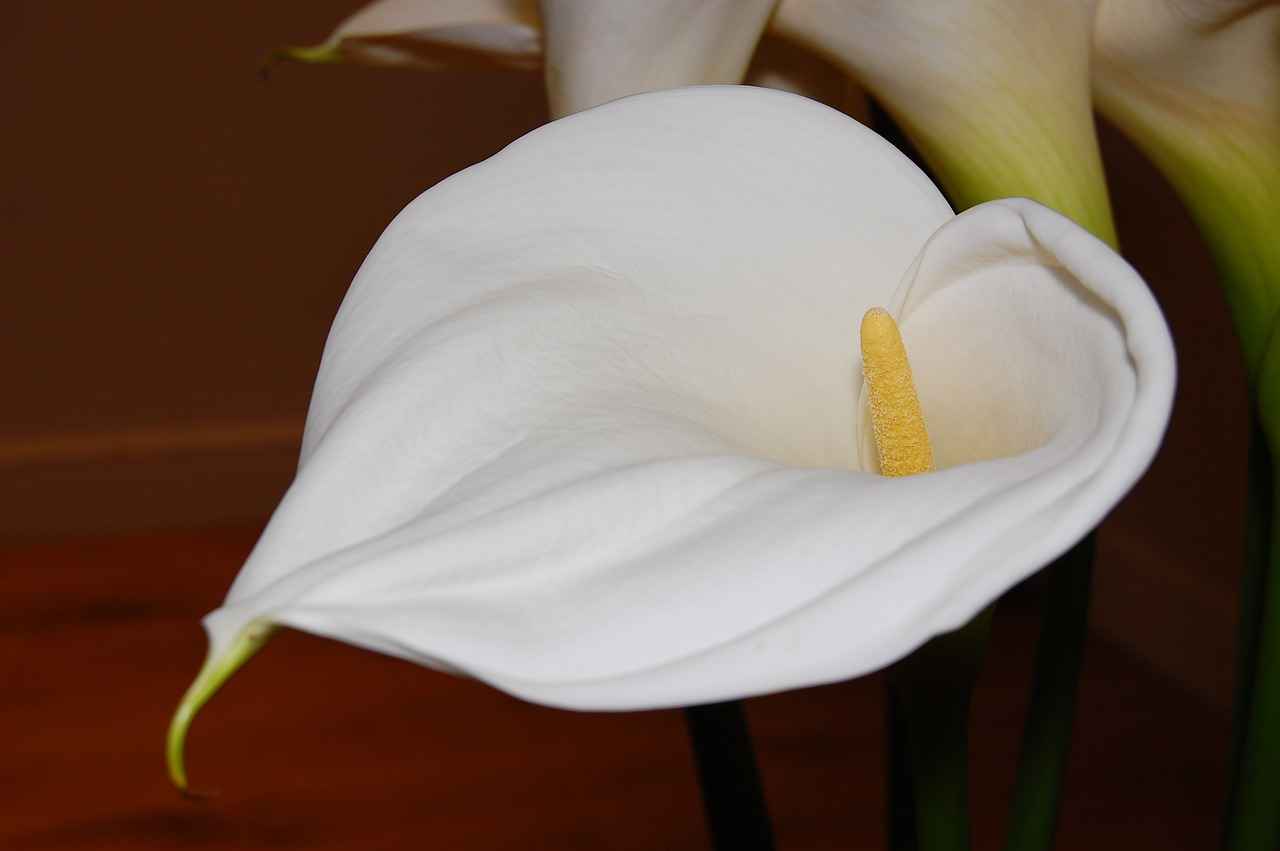
The Peace Lily is a potted plant valued for its beautiful flowers, composed of a white inflorescence with a creamy yellow bulb in the center. It usually blooms from spring to fall. However, often grown in an apartment, it does not want to bloom. There are three main reasons: not enough light, poorly fertilized, watered with hard water.
The Peace Lily doesn’t bloom because it doesn’t have enough light
Reading many articles, you will always find information that Peace Lily likes shade. Yes, it does, and it can do well in the shade, however in full shade, Peace Lily will not bloom. In order to produce flowers, it needs a bright spot, only not strongly sunlit.
The best place is a cupboard or shelf away from direct sunlight coming through the window (preferably about 1 meter from the window). Peace Lily should not, however, stand by the window, because direct hot sun rays are deadly for the plant. The leaves become faded and burn spots appear, causing the leaves to turn brown.
The Peace Lily does not bloom because it is poorly fertilized
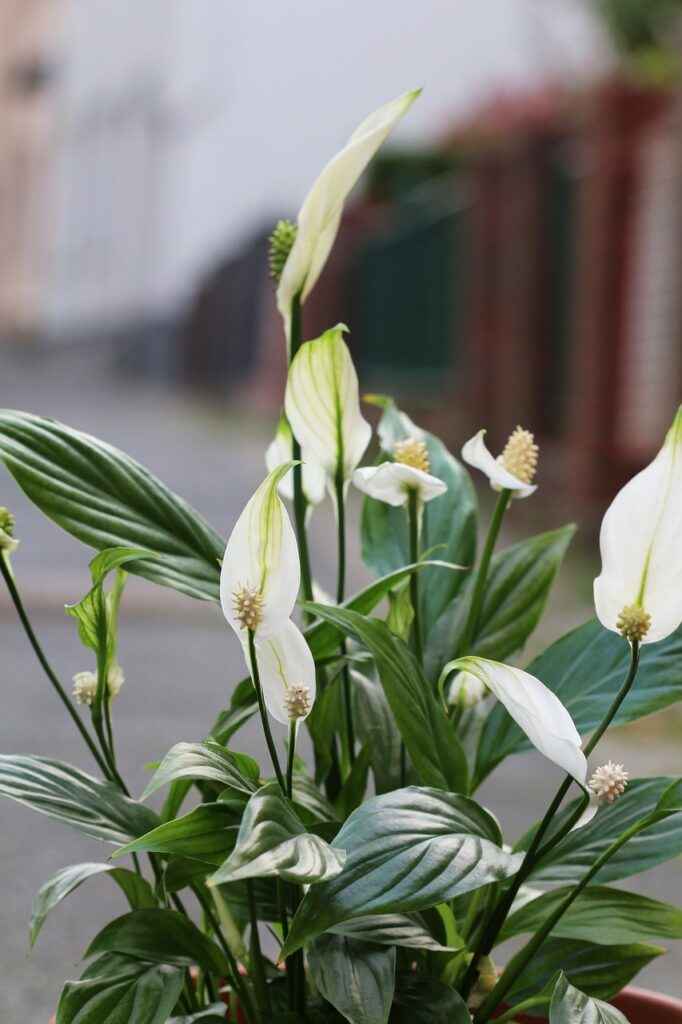
The Peace Lily forms a lot of lush green leaves. The natural choice for fertilizer would seems to be one for potted plants with green leaves. However, these types of fertilizers are mainly rich in nitrogen.
Indeed, the green parts of the plant flourish when nitrogen fertilization is applied. However, this is done at the expense of flowering.
Therefore, when Peace Lily is not blooming, replace the fertilizer for green-leaved plants with fertilizer for flowering plants. These types of fertilizers contain less nitrogen and more potassium and phosphorus.
These elements favor abundant flowering. Such fertilizer is usually used every 7 days, by measuring the appropriate dose indicated on the package.
The Peace Lily does not bloom because it is watered with hard water
Hard and cold water causes brown spots to appear on the Peace Lily leaves between the veins. It also causes the surface of the soil to develop mold in the pot or scale at the edge of the pot. As a result, the plant’s growth is impaired, and thus it stops flowering and producing new flowers.
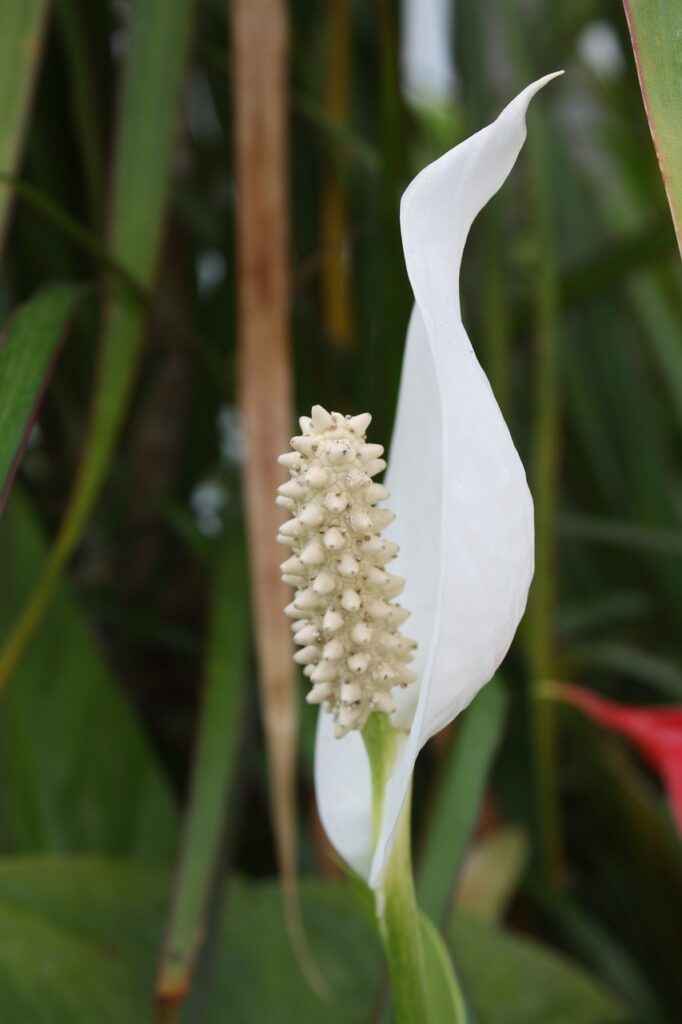
The Peace Lily is found naturally in rainforests, where the rains are warm and the water itself is soft. Therefore, in order for the plant to bloom profusely, soft and warm water should be used.
An additional effect, enhancing the growth and flowering of Peace Lily, is a slight acidification of the water with lemon juice (a few drops in a water bottle) or citric acid (half a teaspoon per 1 liter of water). Use this procedure 1-2 times a month when watering.
You should also remember not to water the plants excessively. Although Peace Lily likes a lot of moisture, the soil in the pot should be kept moist, not wet, and allow the topsoil to dry between watering.
Excess water in the pot causes the roots to rot, which also prevents Peace Lily from blooming and may even die.
Following these few rules will make our Peace Lily bloom systematically and profusely. It is also worth adding that it is an air-purifying plant, so it is worth having it in your home even if the winged flower is not blooming.