Aloe vera how to grow
Aloe is an interesting leaf succulent that is grown in our climate only indoors. Although it seems inconspicuous, it can surprise with its flowers. The medicinal properties of this plant are also appreciated. See how to grow aloe vera at home in a pot, what species and varieties of aloe vera exist, and learn about the best way to propagate aloe in amateur growing.
Aloe vera how to grow at home in a pot
Aloe is a South African perennial with fleshy leaves arranged in a rosette. Due to thermal requirements (the temperature of growing aloe vera can never drop below 7 ° C) in our climate, only the cultivation of aloe at home or in a greenhouse can be carried out.
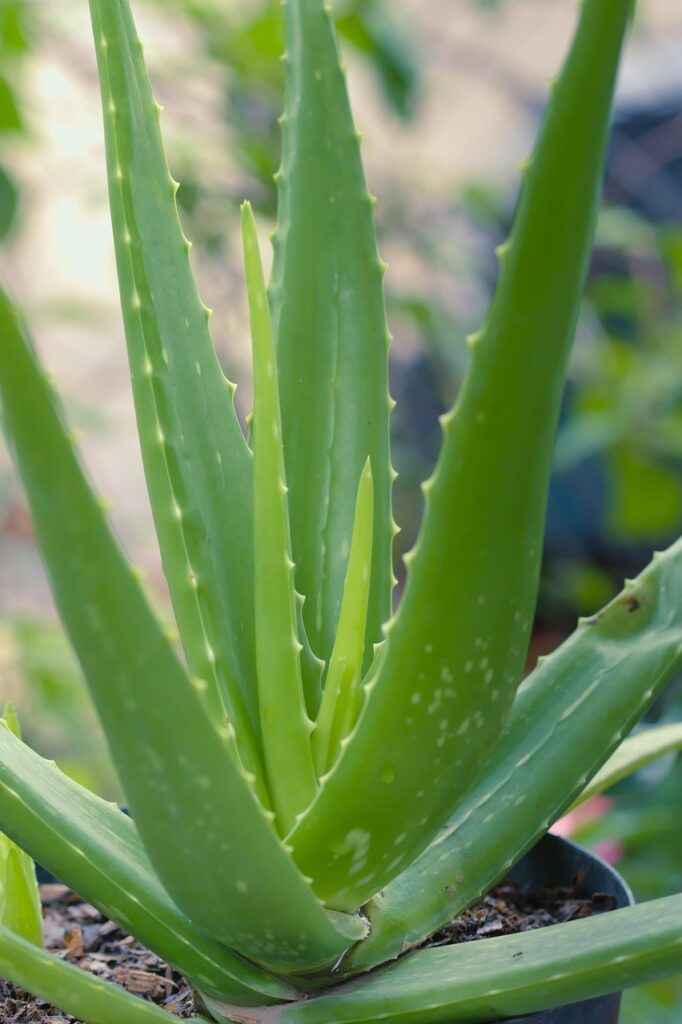
pisauikan / Pixabay
Aloe in a pot requires a bright position, but not excessively sunny (it can be placed on the windowsill if the window is not very sunny, it is better to move a little further away from the window at the southern window) and fertile, permeable soil (a mixture of ordinary flower soil with coarse sand is recommended).
If there is too little light, the aloe leaves will turn pale and soft. This plant tolerates an average room temperature from spring to autumn. In winter the temperature of aloe vera cultivation should be about 10 ° C.
Aloe is a succulent with rich healing properties. It filters the air from pollutants and moisturizes it, and produces oxygen at night. For this reason, it is best to place aloe vera in the bedroom.
Watering Aloe Vera
Water aloe vera systematically. More abundantly in the period from spring to the end of summer, and limit it for the winter. The usual mistake when growing aloe at home is over-watering during the winter. That will cause the roots and leaves to rot.
You can try to save such a plant by cutting out the rotten parts and sprinkling the wound sites with charcoal with the addition of fungicide. It is also worth transplanting aloe to fresh, less compact soil.
Warning! When watering the aloe, be careful not to wet its leaves. The water that remains inside the leaf rosette is a common cause of rotting aloe vera.
The fertilization of aloe is carried out in the period from spring to the end of summer, using a fertilizer for potted plants with an increased potassium content every 10 days.
Transplanting aloe vera into a new pot is usually done every 3 years in the spring. Fill the new pot with a mixture of flower soil and coarse sand. Before pouring the soil, create a drainage layer at the bottom of the pot using small pebbles or expanded clay. If the plant has reached its target size and it is not necessary to transplant into a larger pot, it is enough to replace the top layer of soil with a fresh substrate.
Under favorable conditions for growing aloe at home, it happens that in the fall or winter the plant blooms. Unlike agave that dies after flowering, aloe vera can bloom many times in a pot.
Aloe – varieties
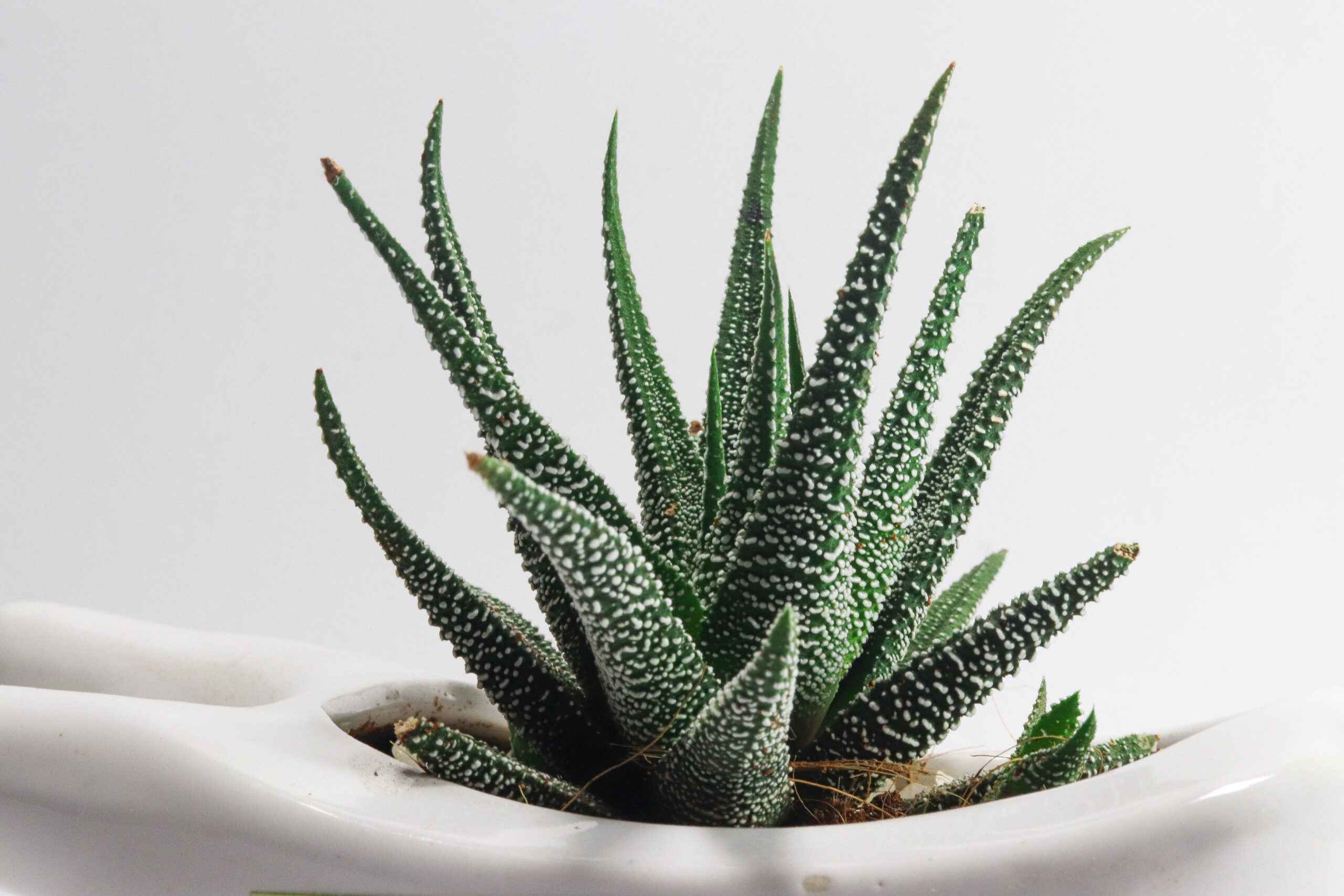
Aloe variegata – sometimes also referred to as tiger aloe, is the easiest to grow and probably the most common in our homes. It creates compact, spiral rosettes of green leaves with smooth edges, pointed, taking the shape of the letter V. The leaves are covered with irregular, transverse stripes of a lighter shade, which are the main decorative value of this variety of aloe. Grown in an apartment, it reaches up to 30 cm in height. It is worth providing the plant with a winter dormancy period with a temperature of 10 ° C, because thanks to this it blooms more effectively, producing orange-red tubular flowers on tall shoots. It belongs to the most easily blooming aloe vera.
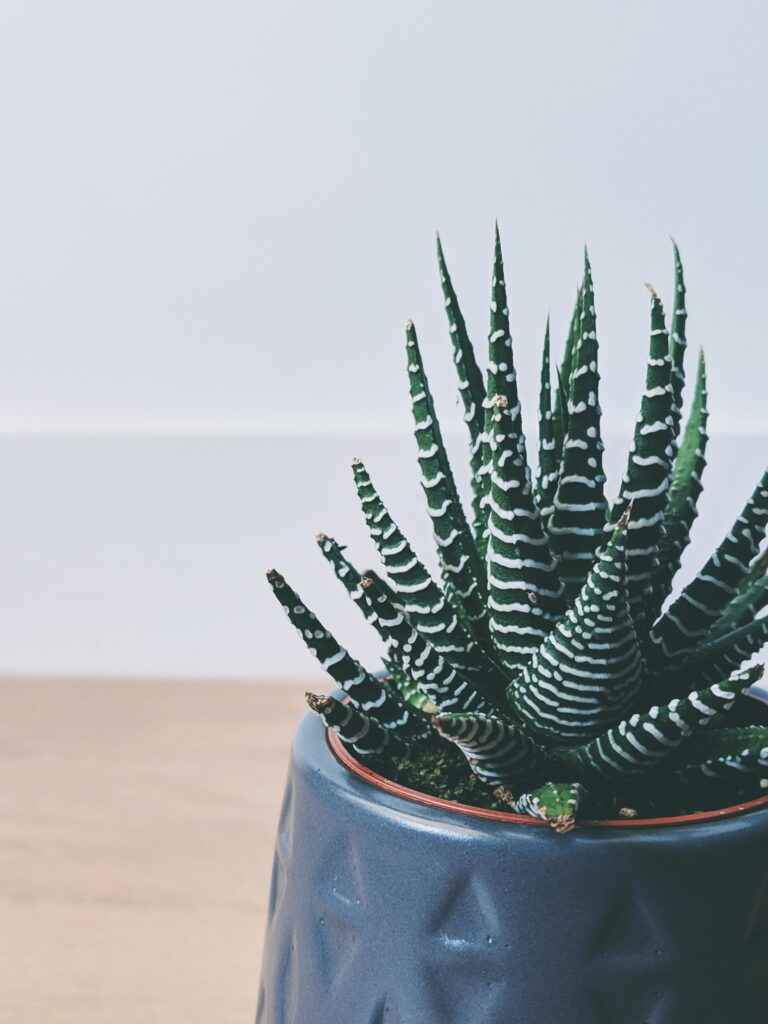
Valeriia Miller at Pexels
Aloe aristata – forms dark green, lanceolate leaves, with a white border, with rare, short and soft spines and streaks of fine spots. The leaf rosette reaches up to 25 cm in height, and the inflorescence shoot can be up to 35 cm long.
Woody aloe (Aloe aborescens) – creates fleshy, sometimes woody stems from below, on which gray-green leaves with spikes on the edges are embedded in pairs. In our climate, it can reach up to 1 m in height.
Common Aloe (Aloe vera, Aloe barbadensis) – also referred to as Barbadian aloe, creates gray-green leaves, spotted in youth. Reaches up to 80 cm in height. In warmer countries, it is commonly found in commercial crops to obtain health aloe vera juice.
Aloe – reproduction
The reproduction of aloe vera grown in a pot is possible in 2 ways.
The first and the easiest one is the propagation of aloe vera from suckers appearing at the base of the shoot, most often after flowering. Separate the legs and root them in a mixture of earth and sand. It is very easy and it is successful in amateur conditions. This treatment is best done when transplanting plants in spring.
If you do not care about aloe flowers, it is worth cutting the emerging inflorescence shoot. The aloe then produces more shoots from which the plant can be propagated.
The second, but much more difficult way is to propagate aloe vera from seeds. This may be successful if our aloe vera has blossomed and then has borne fruit. Seeds can be obtained from fruits when they are ripe and bursting. They should be sown immediately, as they lose their ability to germinate quite quickly.