Why do orchid leaves wrinkle and turn yellow ?
When orchid leaves wrinkle and turn yellow that can be a sign of a disease, result of a mistakes you make in care or a completely natural process that occurs in some orchids. So what to do with yellowing orchid leaves? Here are the top 5 reasons why orchid leaves are wrinkling and turning yellow, and some practical tips for getting your plant back in shape!
1. Orchid leaves turn yellow because it is poorly watered
If you grow an orchid at too high a temperature, without taking care to maintain high air humidity and watering it regularly, you can dehydrate it. This is manifested by the gradual wrinkling, yellowing and drying of the orchid leaves on all parts of the plant.
In this case, the orchid requires immediate hydration. Place the pot with the orchid in a bowl of water and allow the plant to slowly draw water until the leaves and roots recover. Remove all dry parts from the plant.
The cause of yellowing of the leaves can also be too intensive watering of the orchid. Flooded roots are cut off from air, so they stop taking up water and nutrients. As a result, the orchid leaves turn yellow, lose their firmness, with time brown spots appear on the leaf blade, and the plant wobbles in the pot as the root system is reduced. Then you need to replant the orchid to a fresh substrate and water it up to once a week.
2. Orchid leaves turn yellow because it is too dark
Orchid leaves also turn yellow due to poor lighting. This happens most often in the fall and winter season when the amount of natural light is low.
Due to the lack of light, especially in conditions of high air temperature and high substrate humidity, the orchid leaves initially turn light green and then turn yellow.
Additionally, the leaves become watery and brittle. In this case, the orchid should be moved to the brightest possible place and its watering should be limited.
How to care for orchids in a pot?
3. Orchid leaves turn yellow because temperature is wrong
Unsuitable air temperature can also cause yellowing of orchid leaves. When the temperature is too high, the leaves of the orchid quickly turn yellow and dry out due to the rapid loss of water.
Too low cultivation temperature also causes yellowing of the orchid leaves and additionally inhibits the development of new leaves. This leads to the loss of all leaves and the death of the entire plant.
Orchids should be grown at their optimal temperature, which for most species ranges from 20-22 ° C. It should also be remembered that at night the air temperature should always be a few degrees lower than during the day. Otherwise, the orchid dies quickly. The temperature difference between day and night allows orchids to naturally metabolize and grow.
4. Orchid leaves turn yellow from lack of fertilization
Some nutrient deficiencies may manifest themselves in the yellowing of orchid leaves. Most often it is a symptom of nitrogen or iron deficiency. In the case of nitrogen deficiency, the older orchid leaves gradually turn lighter, turn yellow prematurely and die.
However, in the case of iron deficiency, the youngest leaves turn yellow, and often developing ones. In order to avoid deficiencies of nutrients in orchids, from April to September, every 2-3 weeks, use fertilizers with a high nitrogen content and microelements.
5. Orchid leaves turn yellow with aging
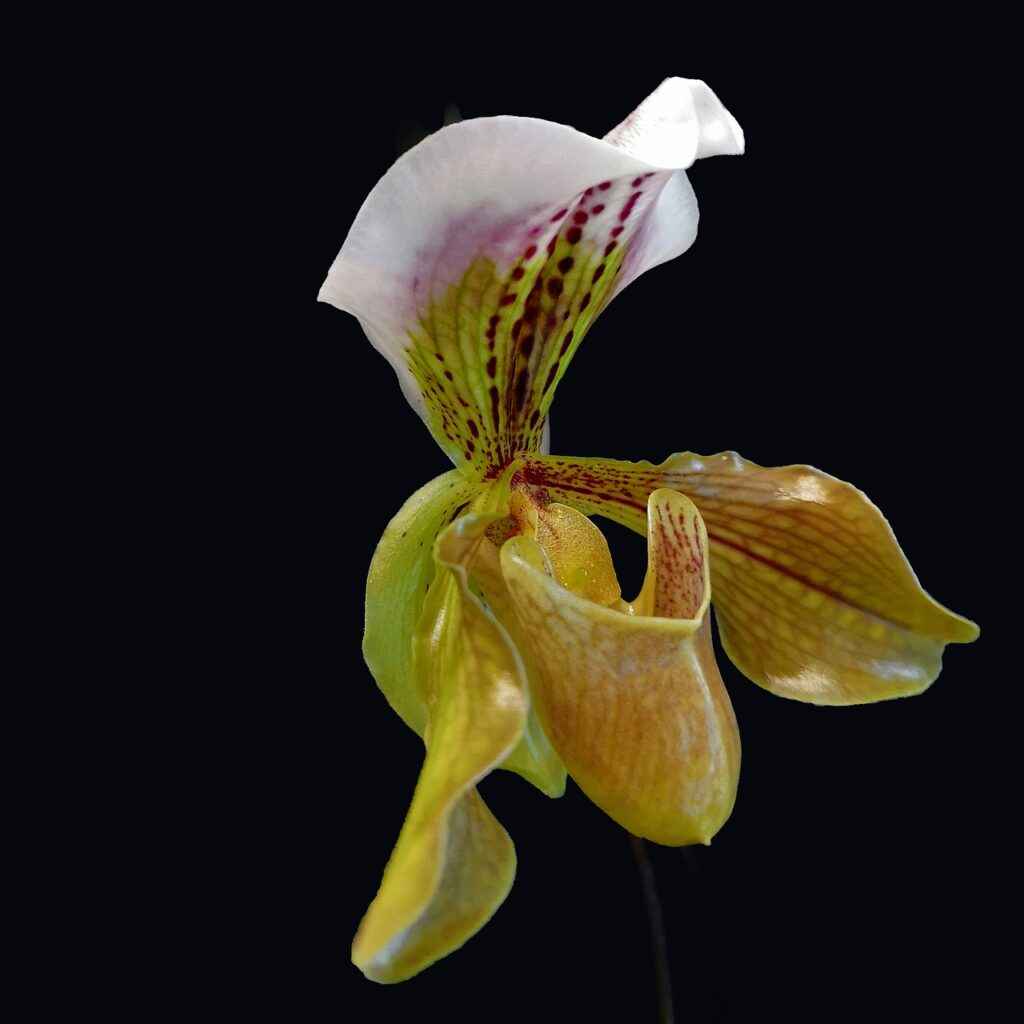
Yellowing and drying of the leaves of an orchid is not always a sign of neglect or disease. Orchid leaves spontaneously turn yellow and die over time, which is a natural process. In orchids of the genus Phalaenopsis and Cattleya, the lower leaves gradually turn yellow and dry, and new leaves grow in their place at the top of the stem.
In species that produce pseudobulbs, such as Dendrobium, the pseudobulbs that have finished flowering die after 3-4 years. During this time, the leaves turn yellow and lose their attractive appearance. Dying parts should be gently removed from the plant.
Often, stress, such as by transplanting an orchid or moving it from the store to your home, can cause orchids to turn yellow and shed. This is perfectly normal and should not be of any concern as long as the leaves do not turn yellow all over the plant.
After bringing the orchid home or after transplanting it into a new pot, you should leave the plant alone so that it acclimates to the new environment and regenerates after the stress.