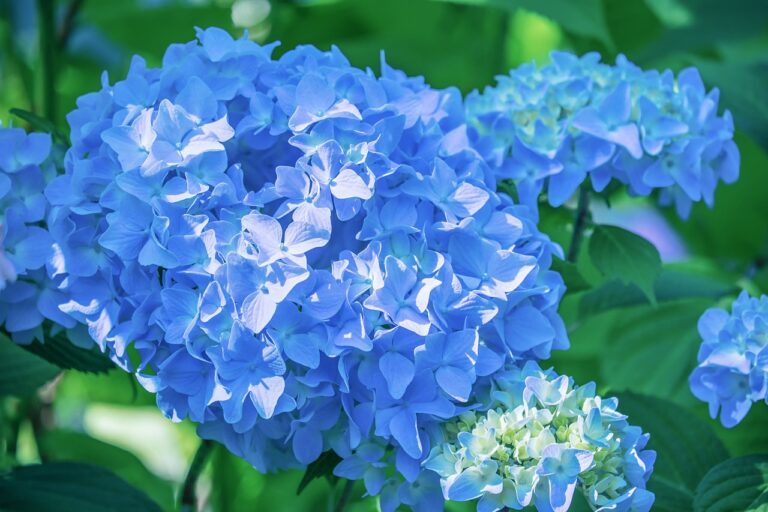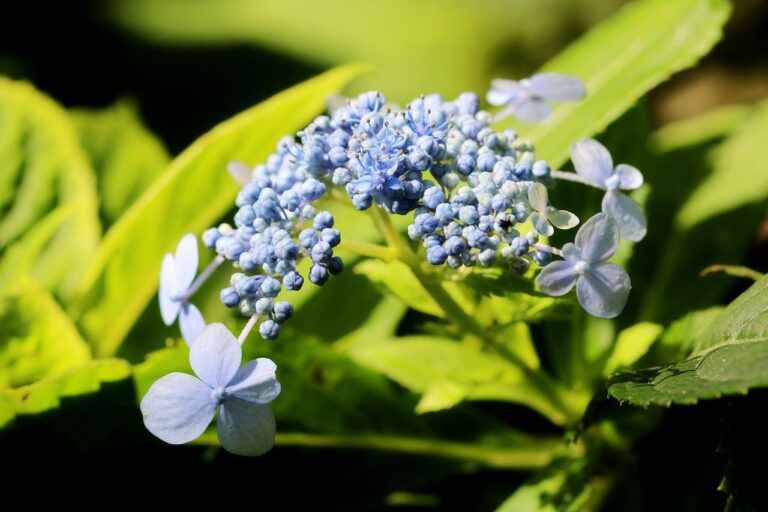
How to make a hydrangea blue ?
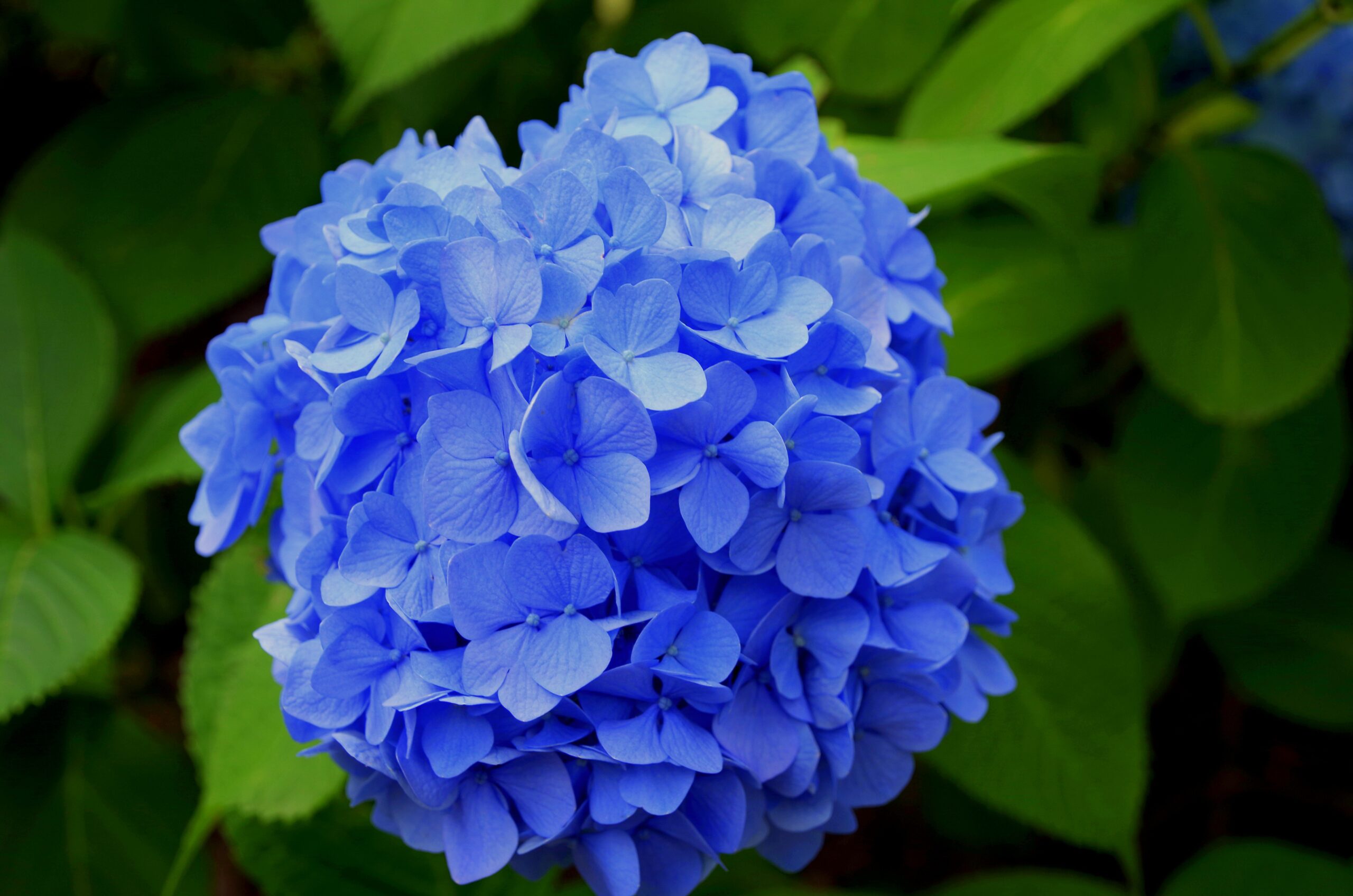
Among the large family of hydrangeas, you can see the garden hydrangea whose flowers contain a special dye. It reacts to the changing values of soil acidity coefficient pH, which is why it obtains delightful colors. How to make a hydrangea blue ?
Substrate and pH value
The decisive influence on the color change of hydrangea flowers is the substrate and its reaction. The rule of thumb is that the more acidic the soil, the more likely the flowers will turn blue.
As a rule, this is the required pH range of 4 to 5.5 for blue flowers. But here too there are some differences between the varieties. At values above this range, the substrate is neutral to basic.
Basic values favor pink flowers. If there is a change in the color of hydrangea flowers, you need to perform a soil analysis and adjust the pH value accordingly.
To acidify the substrate, it is recommended to use peat, oak leaves or coffee grounds. Lime can be used to neutralize the pH or make it alkaline.
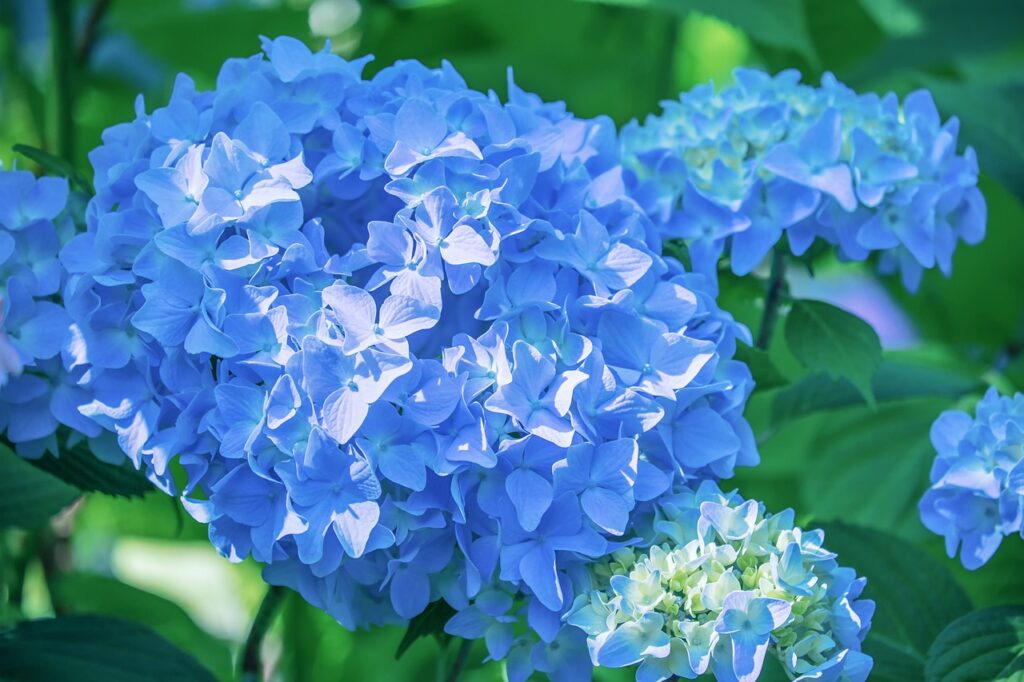
Minerals in the soil
Just like the pH of the soil, the amount and type of nutrients in the soil play an important role in the color of hydrangea flowers. When the flower petals are to get a shade of pink, applying the right fertilizer can help.
Particularly useful and effective are aluminum oxide and alum. These ingredients are taken up by the roots of the hydrangea and gradually change the color of the flowers towards bluish shades. If they are missing in the substrate, you have to reckon with reddish shades.
Because the process of absorbing minerals and changing the color of flowers takes a long time and requires patience, you should react at the first signs of the appearance of an undesirable shade. The easiest way is to use a special fertilizer.
Flower color and pH values
If the pH value is between 4 and 4.5, hydrangeas develop a shade of purple. This one, with the increase in the value of the coefficient, turns into pink and red.
In order for the color of hydrangea flowers to become blue, another factor is necessary, namely aluminum, which must be available to the shrubs in the soil. In an alkaline medium, with a pH value greater than 5, aluminum is bound by calcium, so it cannot be absorbed by hydrangea roots.
As a guide, the following pH can be assumed to indicate color:
pH 7.4 – light pink;
pH 6.9 – pink;
pH 6.5 – dark pink;
pH 5.5 – blue-pink;
pH 5.1 – blue;
pH 4.5 – dark blue.
You just need to warn right away that the color of white hydrangeas does not change. They simply do not contain anthocyanins, natural dyes that react to a change in the pH of cell sap.
How to make a hydrangea blue ?
In order to obtain blue hydrangea flowers, the content of aluminum in the soil is necessary. Two conditions must be met:
- acidic soil with a pH value of 4 to a maximum of 4.5;
- the constant presence of aluminum ions in the soil.
There are stories that a rusty needle can turn a hydrangea blue. It is not a lie that such an addition will increase the iron content in the soil, which acts similarly to aluminum.
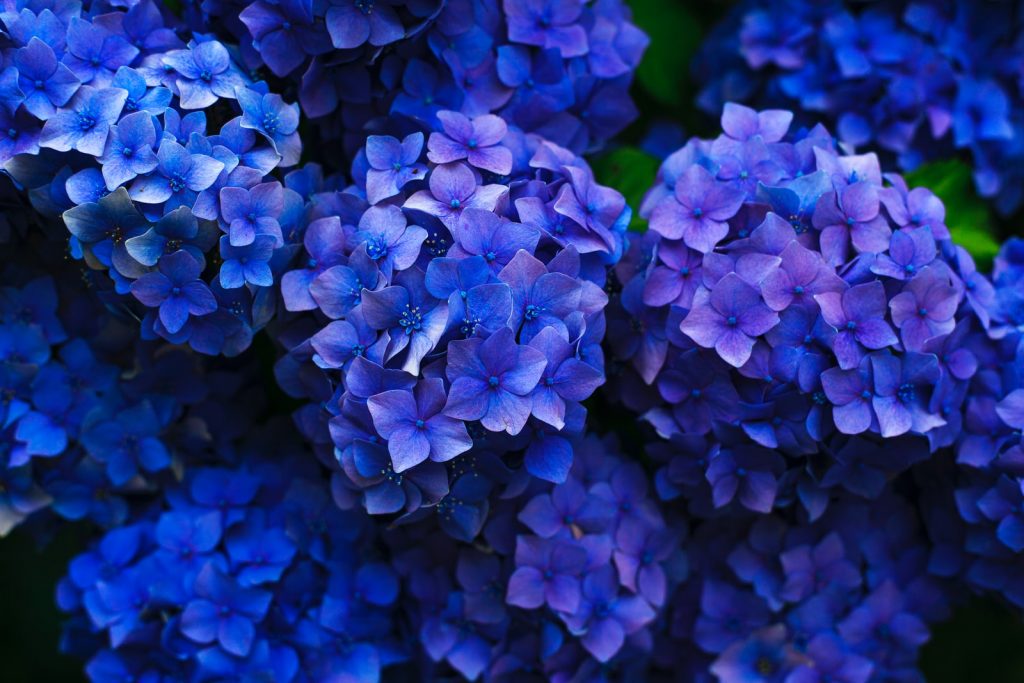
Nevertheless, only the gardener’s grandchildren or great-grandchildren would enjoy the blue of the flowers, because it would take that long to oxidize a piece of iron. There are more effective and much faster methods of hydrangea discoloration.
How to make a hydrangea blue? – step by step guide
- Before starting the treatment, make sure that the hydrangea variety is suitable for color change.
- In February, the soil around the hydrangea should be enriched with forest soil or acidic peat, additionally supplemented with compost.
- From March to the end of July, fertilize the bushes according to the normal “protocol”.
- In addition, from March, sprinkle 20-100 g of alum around the hydrangea.
- Repeat the dose of alum until the desired color of the flowers appears.
- Some gardeners advise to water each bush every week with two liters of water with 10 g of alum dissolved in it.