Aphelandra squarrosa
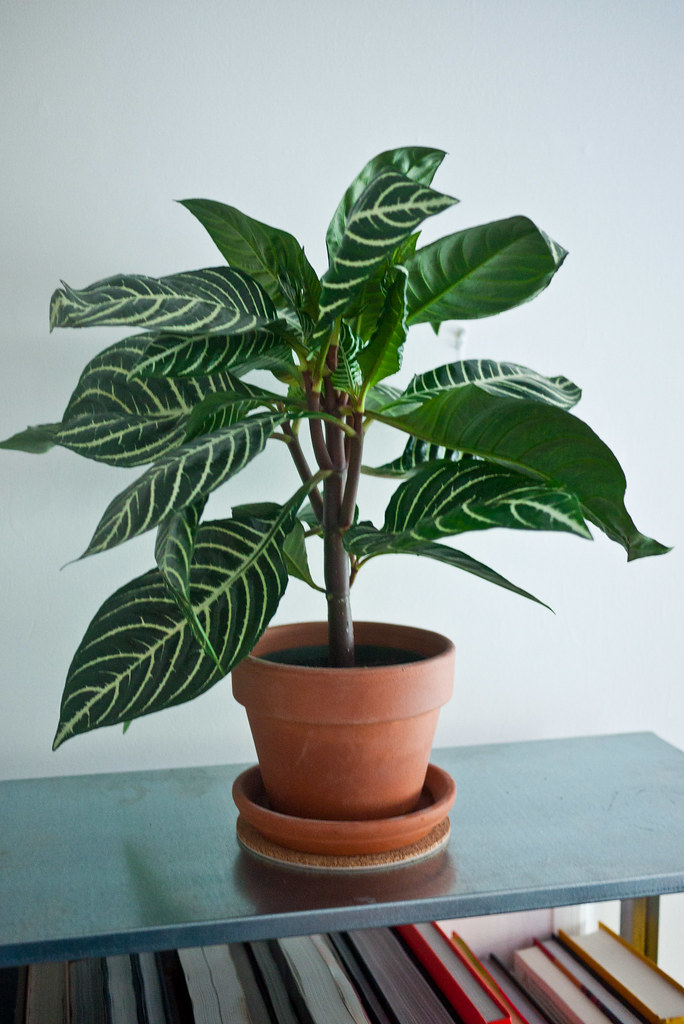
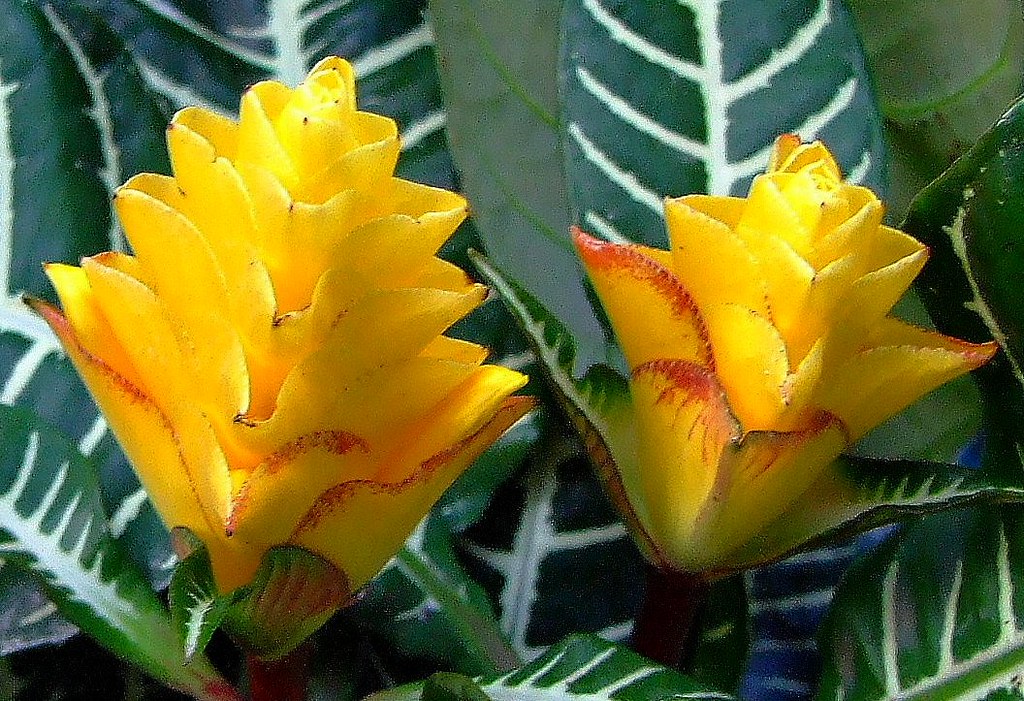
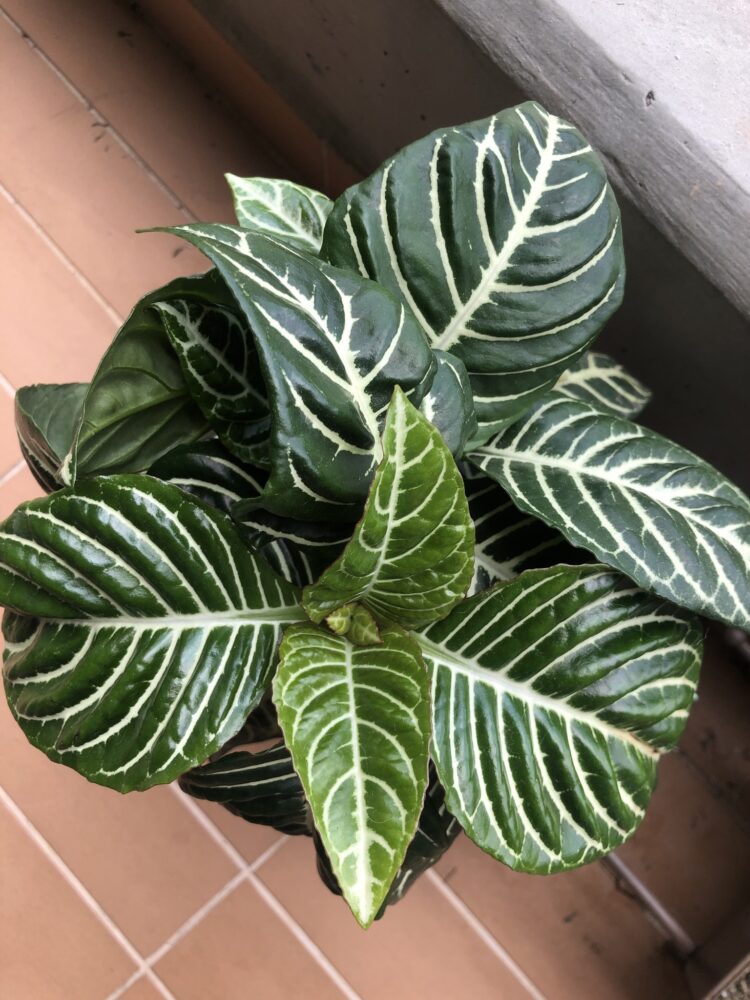
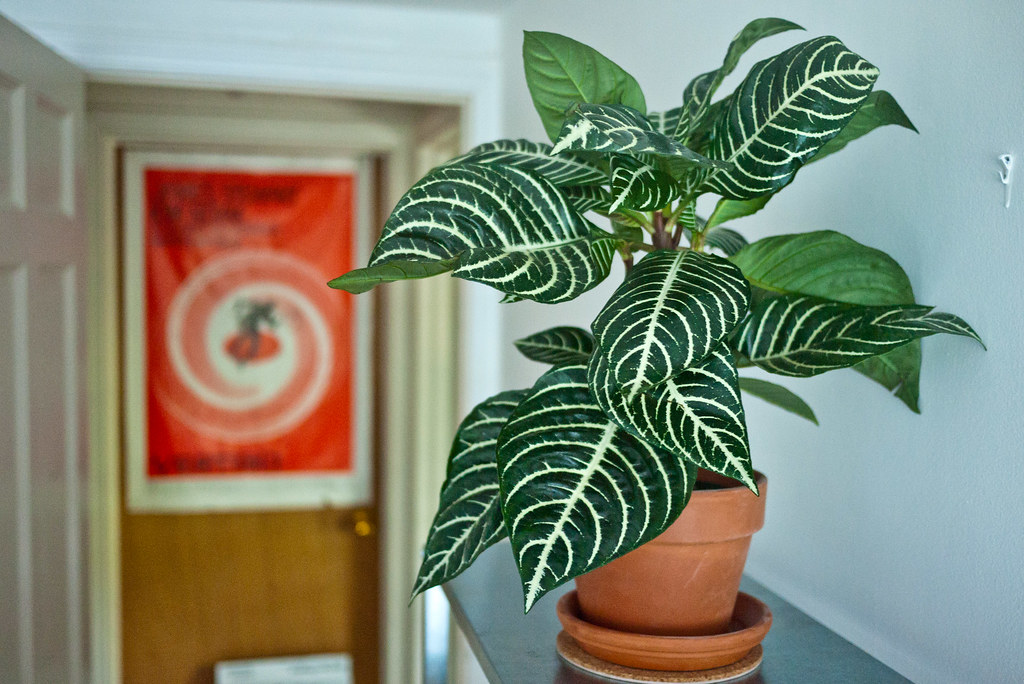
Aphelandra squarrosa, also known as the Zebra plant, is a pot plant with interesting, dark green leaves with clearly visible bright veining and attractive yellow inflorescences, appearing on the tops of the shoots.
What does Aphelandra squarrosa look like?
Aphelandra squarrosa is a perennial of tropical origin, belonging to the Acanthaceae family. In natural conditions, it grows up to 100 cm in height and 80 cm in width, but in pot cultivation, the growth of aphelandra is corrected by annual pruning. Thanks to this, the plants in our homes maintain a compact habit, reaching about 30 cm in height and 20 cm in width.
The decoration of Aphelandra are oval or elliptical, shiny, dark green leaves with clear, bright veining. They can reach up to 20 cm in length. Depending on the variety of Aphelandra, the veining of the leaves can be yellow-cream or silvery-white.
The dorsal yellow flowers of Aphelandra, gathered in spike-shaped inflorescences, appear at the tops of the shoots in summer. However, we will see flowers only when we meet the requirements of this plant and provide it with appropriately high air humidity.
Aphelandra tetragonal stems are stiff and fleshy. In plants pruned annually to maintain a compact habit, they do not require supports.
Aphelandra – requirements and care
Aphelandra requires a bright growing position. However, it should be protected from direct sunlight, because then its leaves are easily burned, their edges turn brown or become covered with brown spots. It is best that the aphelandra does not stand next to the window, and the light that reaches it is filtered, for example, by a curtain.
During the growth period (from spring to autumn), Aphelandra grows well at average room temperature (20-24°C). In winter, the plant should go into a dormant period and then the temperature should be lowered to 15-18 ° C.
In nature, aphelandra grow in the tropical forests of Brazil, where there is very high humidity. Therefore, the plants should be watered regularly, ensuring that the soil in the pot is constantly moist.
It is also beneficial to sprinkle aphelandra leaves with soft, settled water or place flat trays of water next to the plant, which will evaporate and moisten the air. During the winter dormant period, watering is limited.
Aphelandra fertilization is carried out from March to August using mineral fertilizers for potted plants. If you use liquid fertilizer, it is worth adding it to the water for watering once every 2 weeks.
Aphelandra – pruning and repotting
A very important treatment in the care of the protruding aphelandra is its pruning. Unpruned plants grow too tall, lose their compact habit, and their shoots may require support.
Aphelandra blooms in summer, and its permanent bracts last until autumn. Withered inflorescences are cut out in autumn and the plant is put into rest by gradually reducing watering and lowering the temperature to about 17°C.
In February, Aphelandra squarrosa is cut to a height of 15 cm, leaving 3 to 5 strong shoots on the plant. After pruning, the plants can be repotted into larger pots (if the old pot is too small) and fresh soil. Universal soil for potted flowers will be suitable. Remember to put a thin layer of drainage made of small pebbles or expanded clay on the bottom of the pot.
Aphelandra squarrosa – propagation
Propagation of Aphelandra can be carried out in April by taking cuttings from young, growing shoots. In order to obtain cuttings, some of the new shoots are cut, leaving the strongest ones on the plant. Aphelandra cuttings obtained in this way are rooted in water or a constantly moist, sandy substrate heated to 20°C. A specialized electronic soil meter will be helpful in measuring the temperature.
Aphelandra squarrosa – diseases and pests
The curling of the aphelandra leaves and the drying of their edges indicates that the air is too dry or excessively airy. Aphelandra does not tolerate drafts, and in extreme cases the leaves fall.
Therefore, let’s avoid placing pots with the plant in dry and airy places, take care of proper air humidity or spray the leaves of the plant, and keep the aphelandra as far away from radiators as possible during the heating period.
Drying and brown spots on aphelandra leaves may be a sign of leaf burn caused by too much sunlight. In such cases, we remove damaged leaves and move the plant away from the window.
On the bracts and young leaves of aphelandra squarrosa, clusters of tiny bugs may appear, secreting a sticky goo. These are aphids that are combated by spraying with water with the addition of potassium soap (dissolve 10-20 g of soap in 1 liter of water) or one of the ready-made preparations for potted plants.
Oval, yellow or brown, convex shields appearing on the leaves along the veins and on the petioles are a symptom of scale attack. In turn, sticky, white balls resembling cotton wool or wool, usually located on the underside and in the axils of aphelandra leaves, are a symptom of a mealybug attack.
Both types of aphelandra pests are removed by wiping the plant with a cotton swab or cotton buds soaked in denatured alcohol or spirit.
Yellowing and falling leaves of aphelandra squarrosa may be the result of spider mite feeding. These pests are very small and you will only notice them under a magnifying glass. Look for them under the underside of the leaves.
A good test is to put a white piece of paper under it and shake the plant vigorously. If there are small dots that have fallen off the plant that move, you will be sure that it is a spider mite.